Smith County Dog Registration Information
Service Dogs and Emotional Support Animals in Smith, Tennessee
If you’re asking where do I register my dog in Smith County, Tennessee for my service dog or emotional support dog, the key thing to know is this: in Tennessee, most “registration” people refer to is actually a local dog license (often tied to proof of rabies vaccination), plus compliance with local leash/at-large rules. Service dogs and emotional support animals (ESAs) are handled differently under the law and generally do not get “certified” by the county in the same way a license tag is issued.
This page explains how a dog license in Smith County, Tennessee is typically handled, which public offices may be involved, what rabies documentation to keep, and how service dog legal status differs from an ESA.
Where to Register or License Your Dog in Smith County, Tennessee
Licensing and animal control enforcement are often handled at the city or county level. Below are example official offices that residents in Smith County, Tennessee may contact for guidance on a local dog license, rabies-related questions, or animal control enforcement. If you live inside a municipality (for example, within Carthage city limits), you may have an additional city-level contact for animal control matters.
Official Offices (Examples)
| Office | Address | Phone | Hours | |
|---|---|---|---|---|
|
Smith County Health Department
Public health; rabies & immunization-related guidance
|
251 Joy Alford Way
Carthage, TN 37030
|
615-735-0242 | Not listed on the referenced office page |
Mon–Fri: 8:00 AM – 4:30 PM
Closed state holidays
|
|
Smith County Clerk
County administration (contact for local direction if unsure who issues tags)
|
122 Turner High Circle, Suite 101
Carthage, TN 37030
|
615-735-2294 | Not listed on the referenced office page |
Mon–Fri: 8:00 AM – 4:00 PM
|
|
Town of Carthage (Town Hall)
Municipal contact (especially for residents inside Carthage)
|
314 Spring Street
P.O. Box 259
Carthage, TN 37030
|
615-735-1881 | Not listed as a general public inbox on the referenced profile |
Mon–Fri: 8:00 AM – 4:00 PM
|
|
Carthage Police Department (Animal Control Inquiries)
Animal control contact for Carthage leash law enforcement
|
Street address not listed on the referenced animal control page | 615-735-2525 | Not listed on the referenced animal control page | Hours not listed on the referenced animal control page |
Tip: If you’re not sure which office issues the actual dog license tag where you live, start with your city (if you live inside city limits) or contact the county health department or county clerk for direction.
Overview of Dog Licensing in Smith County, Tennessee
What “registering your dog” usually means
In day-to-day use, “registering” a dog typically means getting a local dog license (sometimes called a license tag). A dog license helps local authorities identify a dog’s owner, supports animal control operations, and often confirms that the dog has current rabies vaccination documentation on file.
Licensing is local (county/city), not a statewide pet registry
A common source of confusion is the idea that Tennessee has one statewide pet registration system. In practice, licensing is usually handled locally by a county or municipality, and the exact process can vary depending on where you live in Smith County. That’s why people searching for:
- where to register a dog in Smith County, Tennessee
- animal control dog license Smith County, Tennessee
- dog license in Smith County, Tennessee
may get different answers depending on whether the address is inside a city boundary (like Carthage) or in the unincorporated county.
Rabies vaccination requirements (why they matter for licensing)
Rabies rules are a major reason local governments require proof of vaccination. While the exact local licensing steps can vary, it’s common for a license application or tag issuance to require proof of current rabies vaccination from a licensed veterinarian. Rabies compliance also matters if your dog bites someone or is involved in an exposure incident, because public health officials may have to make decisions about observation/quarantine and next steps.
How Dog Licensing Works Locally in Smith County, Tennessee
Step 1: Confirm whether your address is inside a city limit
The first step is figuring out whether your residence is within a municipality (for example, within Carthage). City limits can affect who enforces leash laws, who you call for animal control matters, and sometimes where you obtain a license tag (if the city issues one).
Step 2: Keep rabies documentation current
Even if your dog primarily stays at home, keeping rabies paperwork current is important. Save:
- Rabies vaccination certificate or receipt from the veterinarian
- Rabies tag number information
- Vet clinic contact details
If you’re asked for proof for a dog license in Smith County, Tennessee, this documentation is usually what you’ll show. If you’re unsure what’s accepted, call the appropriate local office first and ask what they require to issue or renew a local license tag.
Step 3: Contact the correct local office about licensing
Because licensing is often managed locally, the best approach is to contact an official Smith County or municipal office and ask:
- Who issues dog licenses/tags for my address?
- What proof is required (rabies certificate, ID, residency, etc.)?
- What are the fees and renewal periods?
- Do I need to license my dog even if it is a service dog or ESA?
This is also the fastest way to avoid third-party “registration” websites that are not part of local government.
Step 4: Understand enforcement: animal control, leash laws, and rabies issues
Local agencies may become involved when a dog is found running at large, is involved in a bite/exposure incident, or is suspected of not meeting vaccination requirements. For residents within Carthage, the town’s animal control information directs animal control inquiries to the Carthage Police Department.
Service Dog Laws in Smith County, Tennessee
Service dog legal status is not the same as a dog license
A dog license is a local government requirement (when applicable) for owning a dog in a particular city or county. A service dog, by contrast, is defined by what the dog does: it is trained to perform tasks for a person with a disability. A service dog’s legal protections generally come from disability rights laws and the dog’s trained tasks—not from a county-issued “service dog registration.”
Do service dogs still need local licensing and rabies vaccination?
In many areas, a service dog must still comply with neutral public health and safety rules (like rabies vaccination requirements and, where applicable, local licensing). In other words, being a service dog usually does not eliminate the need to follow local animal rules that apply to all dogs. If you’re trying to confirm where to register a dog in Smith County, Tennessee and your dog is a service dog, ask the office whether the same license process applies and whether any fee reductions/exemptions exist under local policy.
Avoid third-party “service dog registries”
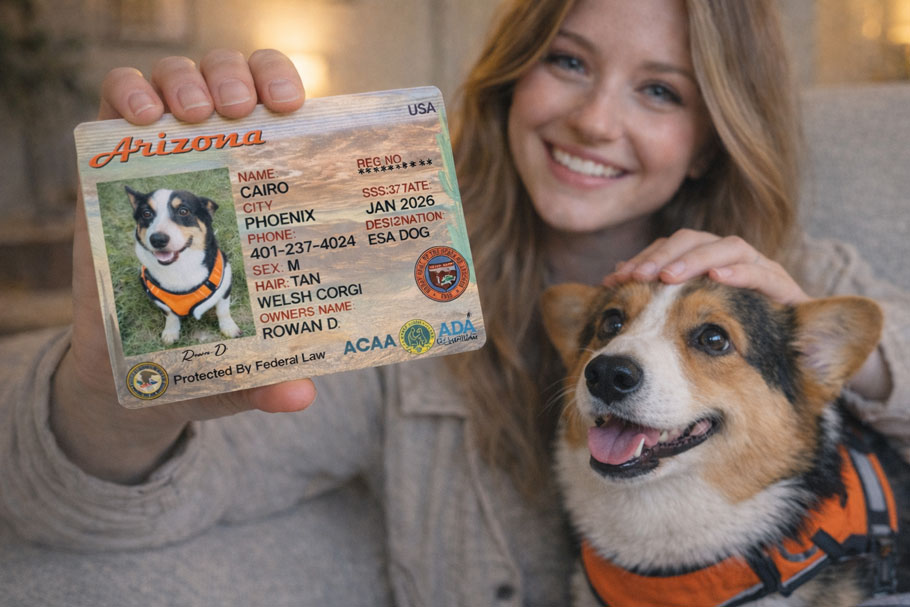
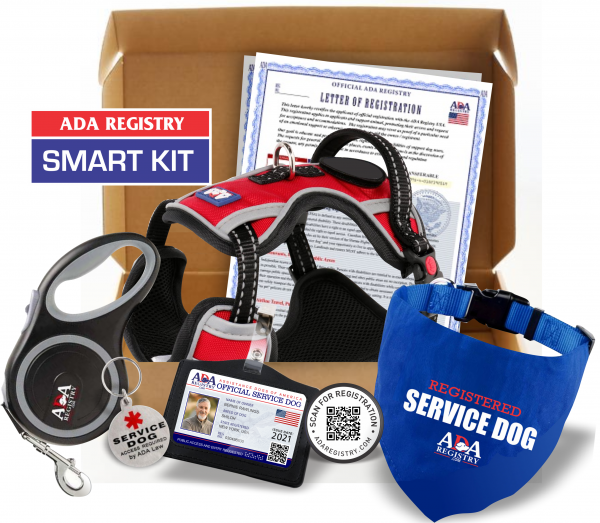
Many websites sell “registration,” ID cards, certificates, or vests. These products are not the same as a local license tag and are not what creates service dog rights. For legal clarity, focus on (1) the dog’s training and task work, and (2) local compliance items like rabies proof and any required local license.
Emotional Support Animal Rules in Smith County, Tennessee
ESAs are different from service dogs
An emotional support animal (ESA) provides comfort by its presence, but it is not the same as a service dog trained to perform tasks. ESAs generally do not have the same public access rights as service dogs. That’s why people searching “where do I register my dog in Smith County, Tennessee for my service dog or emotional support dog” often get mixed information: the “registration” concept is used differently depending on the animal’s role.
Housing-related documentation vs. local licensing
ESA documentation is most commonly relevant in housing contexts (for example, when requesting an accommodation). That documentation is separate from local requirements like a dog license in Smith County, Tennessee or proof of rabies vaccination. Even with an ESA, you may still need to follow local rules that apply to all dogs where you live.
What not to do: paying for “ESA registration” as a substitute for local compliance
Buying an ESA “registration” online is not the same as getting a local dog license tag and does not replace local requirements. If your goal is local compliance, focus on rabies vaccination proof and contacting the appropriate Smith County or municipal office listed above.
Frequently Asked Questions
Disclaimer
Licensing requirements and office locations may change. Residents should verify details with their local animal services office within Smith County, Tennessee.
Register A Dog In Other Tennessee Counties
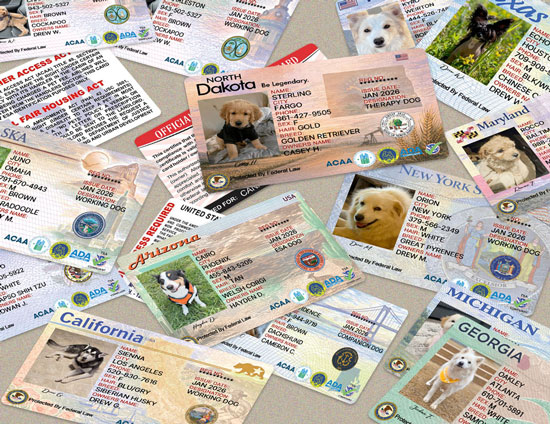
Select your county below to get started with your dog’s ID card. Requirements and license designs may vary by county, so choose your location to see the correct options and complete your pup’s registration.
- Anderson County Dog Registration
- Bedford County Dog Registration
- Benton County Dog Registration
- Bledsoe County Dog Registration
- Blount County Dog Registration
- Bradley County Dog Registration
- Campbell County Dog Registration
- Cannon County Dog Registration
- Carroll County Dog Registration
- Carter County Dog Registration
- Cheatham County Dog Registration
- Chester County Dog Registration
- City of Hartsville County Dog Registration
- City of Lynchburg County Dog Registration
- City of Nashville County Dog Registration
- Claiborne County Dog Registration
- Clay County Dog Registration
- Cocke County Dog Registration
- Coffee County Dog Registration
- Crockett County Dog Registration
- Cumberland County Dog Registration
- Davidson County Dog Registration
- Decatur County Dog Registration
- DeKalb County Dog Registration
- Dickson County Dog Registration
- Dyer County Dog Registration
- Fayette County Dog Registration
- Fentress County Dog Registration
- Franklin County Dog Registration
- Gibson County Dog Registration
- Giles County Dog Registration
- Grainger County Dog Registration
- Greene County Dog Registration
- Grundy County Dog Registration
- Hamblen County Dog Registration
- Hamilton County Dog Registration
- Hancock County Dog Registration
- Hardeman County Dog Registration
- Hardin County Dog Registration
- Hawkins County Dog Registration
- Haywood County Dog Registration
- Henderson County Dog Registration
- Henry County Dog Registration
- Hickman County Dog Registration
- Houston County Dog Registration
- Humphreys County Dog Registration
- Jackson County Dog Registration
- Jefferson County Dog Registration
- Johnson County Dog Registration
- Knox County Dog Registration
- Lake County Dog Registration
- Lauderdale County Dog Registration
- Lawrence County Dog Registration
- Lewis County Dog Registration
- Lincoln County Dog Registration
- Loudon County Dog Registration
- Macon County Dog Registration
- Madison County Dog Registration
- Marion County Dog Registration
- Marshall County Dog Registration
- Maury County Dog Registration
- McMinn County Dog Registration
- McNairy County Dog Registration
- Meigs County Dog Registration
- Monroe County Dog Registration
- Montgomery County Dog Registration
- Moore County Dog Registration
- Morgan County Dog Registration
- Obion County Dog Registration
- Overton County Dog Registration
- Perry County Dog Registration
- Pickett County Dog Registration
- Polk County Dog Registration
- Putnam County Dog Registration
- Rhea County Dog Registration
- Roane County Dog Registration
- Robertson County Dog Registration
- Rutherford County Dog Registration
- Scott County Dog Registration
- Sequatchie County Dog Registration
- Sevier County Dog Registration
- Shelby County Dog Registration
- Stewart County Dog Registration
- Sullivan County Dog Registration
- Sumner County Dog Registration
- Tipton County Dog Registration
- Trousdale County Dog Registration
- Unicoi County Dog Registration
- Union County Dog Registration
- Van Buren County Dog Registration
- Warren County Dog Registration
- Washington County Dog Registration
- Wayne County Dog Registration
- Weakley County Dog Registration
- White County Dog Registration
- Williamson County Dog Registration
- Wilson County Dog Registration